


Interview with Bronco Lane MM, BEM. Everest South Ridge First Ascent 1976
- Sean William Mackey
- Oct 25, 2025
- 13 min read
Major Michael Lane MM, BEM is well known in the Army Mountaineering Association and was part of some of the early expeditions and first ascents the association were involved in. Known as ‘Bronco’ he is a highly decorated Special Forces soldier with service in Aden, Oman and Northern Ireland- he had an exceptional military career. He became a noted speaker and lecturer along with being a published author after his retirement. Unfortunately, he has developed Alzheimer’s and struggles to remember all the detail from his life. I caught up with him on a ‘good day’ in his lovely home in Hereford to talk through what he remembers.

So how did you start off in the Army?
Well I started in Junior Leaders in Nuneaton and it changed my life really. I was a bit of a Manchunian yob- I worked on the Market and as a delivery boy. I hadn’t really done anything until I went into boys’ service in Nuneaton and we had some bloody good instructors…I was just 16. We had a great troop and headshed in Milne Troop. We did things as well the boys service drills, we went outward bounding.
Was that your first experience in climbing?
No, I was outward bound as a boy and I did a three-week stint in Ullswater. That really turned me onto the outdoors, which meant in the military I was always looking for extras. I joined 7 (Para) RHA from boy service as it sounded like a bloody good outfit to be involved in.
But they throw you out of perfectly serviceable aircraft?
Absolutely, the trick is to remember where the reserve is! I had three years with 7RHA and then Aldershot began to get under my skin. I was a single bloke living in barracks and been in Aden two or three times and it was Garrison, Garrison, Garrison. I heard about 22 SAS from listening to the seniors talking. I was doing a job called a technical assistant where I looked after all the detail of where the rounds landed.
Where you heavy gun or light gun?
Light gun (105mm) (ed. Which is still in service). Being Paras it’s the only thing you can get out of an aircraft. I got involved with thinking outside of the box. In Aden we’d been supporting 22 SAS and we’d been in the NAAFI chatting away as you do, and they made a comment of ‘I wonder how the boys are getting on back in Hereford?’. Hereford? I started listening more to gossip and for details on the SAS. We weren’t recruited, I just went in the Sergeant Major one day when I’d had enough and said I wanted to go on selection- I heard they couldn’t turn an application down! They can make life bloody miserable for you until you leave though…
My Troop Sergeant was known as ‘Sass Boyer’ cause he’d done some time with the SAS ten years before. He was a likeable fellow, a fairly strict disciplinarian, but as soon as I said I was applying to go to Hereford on selection he said ‘Are you? We’ll have to get you fit…go join the boxing team’.
I became part of the boxing team- I had one fight and got beat by a lad in 3Para. Everyday there was training- The army at the time was pushed to filled day with useful things so we did a lot of physical training. Meanwhile I am hearing all about Hereford (Boots and navigation). I wasn’t a bad navigator as I was a trained technical assistant so mapwork came as second nature. I went on selection and was told ‘Don’t come back’. That was just the right poke for me as I would never have dreamed of coming back to the mainstream army. He did it deliberately.
I was on selection for three weeks. I was a round peg in a round hole as the whole ethos was selection is self-motivated. I was okay with that!
How did you get involved with the Army Mountaineering Association?
When I joined 22 SAS, I joined A Squadron and as I walked through the door with the other successful lot (There were about 8 of us) they were dishing out troops. The SAS Officer was doing it as we walked past (Mountain, Mobility, Boat, Air, Mountain, Mobility, Boat, Air). No chat about your interests- You’re a soldier you’ll do as your told.
went 1 Tp A Sqn which was mountain luckily. The two seniors were good instructors and there were other lads who could climb, but these two seniors were really good. Every spare minute between courses and exercises we went climbing. They said ’I am going to teach you to climb at night having never been here before’ that was the aim. Bloody hell! Its hard, much harder than selection. A month later I was accepted into the troop. They had their own selection and they tried to get the natural climbers.
Did that make it easier to get on expeditions?
It did because we trained hard and you brought something to the party. We were so into it we did it in our spare time too. Single blokes you know- North Wales wow! I actually went to Chamonix for three weeks and that was a big boost- really eye opening!

Was that in the 60’s and 70’s?
1967 or 1968 I think?
Because that was a long way to go and not many people used to leave the country back then?
We did it in proper kit too. We did Mont Blanc, Matterhorn and the Grand Jorasse. I never kept a logbook of climbs (I never have in my life) and even now my brains befuddled I can’t remember with any certainty what we did. I’ve tried to write my biography, but I can’t remember any of the detail.
So, all my books are non-technical and stories basically.
You did your first season in Chamonix. What trips did that allow you to go on?
I really wanted to go on a big one. My first was to Canada and then the Indian Himalaya in 1972. It was a total success for me personally and I was teamed up with a chap called Noel Dilly (who a civilian medical chap working in the Navy).
We also did a FA on Nupste and I did Everest three times- Two of which were AMA trips and one that I led. So, when I led one it was a 22 SAS expedition from Hereford.
Expedition leadership is stressful. What are your thoughts on this? Any top tips?
Get to know your fellas and use them as much as possible like any leadership situation. Not use them in a negative sense but task them. Ration man, medic, communicator.
Selecting a team is not easy. Self-selective is probably the easiest and as good a way as any. It was always by invitation in my day and we only took good climbers that you know. I never had to balance a team with ranks, genders or anything. I wouldn’t ask them if I didn’t want them to come!

A lot of the pressure we feel now is to select a team that is a cross section of the army.
The word used to go out and people would come and find you. In my time it was never formal, there was a headshed in the AMA, but there were so few of us, so we all knew each other. A small group there was only forty active members.
Wow. At the moment we’re hovering just below 3000 members and are the biggest mountaineering club in the country.
I think the military get their moneys worth and if people go on these big expeditions maybe 80% will want to stay in the Army. They’ve had an experience that translates into military work. Being under fire and stretched.
Even back then you were thinking about retention with these expeditions? Using them as a way of keeping valuable people in the Army?
They retained themselves. If they’re happy they stay in their unit. Given my unit I was luckily belonged to they were on the edge. Politically, militarily, manpower and financially the SAS wasn’t covered in gold like a Cavalry Regiment.
Particularly on the manpower side. People would just wear out- they’d have five years of constant stress and pressure then their original parent cap badge would dangle promotions and rank. They’d get good jobs after tours in Hereford to get them back in their units. Not easy.
So, if one is bone headed enough to put together an expedition that would also be a good recruiter. Because it is- Its putting something in full view that is military and positive. It put the military teams in full view of the civilian climbers too. The civilians used to love the military climbers and would want to get us involved. Joe Brown would pull us into his shop or the pub because we were out there doing real stuff.
Do you still get the AMA journal and keep up with current stuff?
I haven’t really looked at them. To be honest now I first look through to see if there are any deceased that I know- The obituaries you know.
I do read it through a couple of times to absorb it.
Do you think the current expeds are as cutting edge as some of yours or do you think the Army is more risk adverse?
I think they’re still doing the same sort things. How do you sell risk- Its bloody difficult especially amongst soldiers that are in constant danger a lot of the time? What I used to emphasis to senior officers or sponsors was that the soldiers and the Army gained. The soldiers got to go climbing in amazing places and they Army got skills they wanted.
The civilians couldn’t believe the expeds we used to go on and the support. They’d often say ‘What you get all your rations paid for? You get flights into Nepal? You’re lucky buggers you!’ All good craic you know. There is a real history or mountaineering and sailing expeditions on the military- We’ve been doing it for a long time you know. Mixed up and living off each other.
The thing I never got into discussion about, I just did it, was the join of military operations and mountaineering. The similarity of a small climbing team and a recce team are so similar. Self-contained. I don’t know if anyone was written it yet but the skills are very similar. You have to look after each other on the expedition. The strain in both fields are the same.
My bosses, especially Mike Wilkes1, always used to joke about what I was up to next. They’d never expect a 20-page report detailing what we were doing on their desk next Monday. They gave us such freedom!
You’re quite famous for the AMA 1976 expedition to Everest. The South Ridge wasn’t it?
Yes, we did. Me and Brummie Stokes. We were on Nupste as a work up and it was next door. Brummie and I did a lot of talking and listening during that exped. The Nupste expedition was hard emotionally, mentally and physically so it focuses the brain for staying alive and growing.
I was a Lance Corporal and looking at Everest wanting to get on it. The 1976 expedition was open to all the talent in joint services. I made sure I was always in the picture by just being there and quietly being seen getting on with it. I never went out of my way to push myself forward I was just always there with a brew ready to go. Others were asking ‘Why am I not in this climbing team’ or ‘That climbing team’.
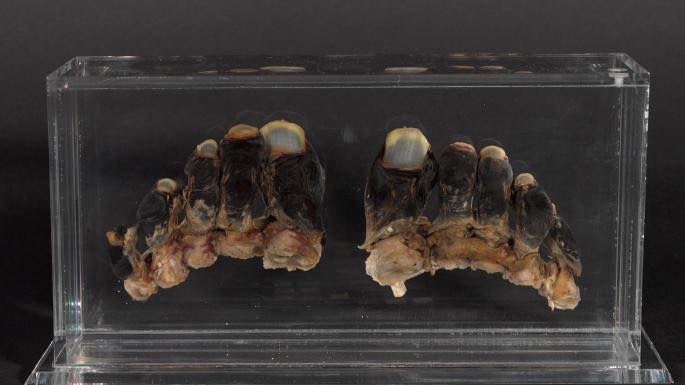
I had quite a lot of credibility with the Everest team as Brummie and I were the only two to survive out of our six-man team of that Nuptse exped. So that experience and my ‘survivability’ gave us a boost. On that expedition (Nuptse) we moved when we had to move and could move. We never thought we’ve got two days rations we must be down in two days; we would have made two days last two weeks- we were going to get down alive! We watched the first two go and the we knew they were dead it was radioed up to us.
Nuptse was harder on our brains that Everest, physically as well, I think.
Why do you think that was?
The loses gave us a lot of mental strain, much more than Everest. When we went for the South Ridge Brummie and I said we’re going to go for it. Another team member stepped forward and said he wanted to join us. I said, ‘I don’t think so, mate, Brum and I are going for it and might not be coming back’. We never went to die, but that guy had a wife and kids and I didn’t want that to happen again.
How well did you know Brummie Stokes your fellow summiteer?
He was SAS as well but had a proper infantry background. I was just a scabby gunner. He was Green Jackets and we met in the same (mountain) troop. He lived in the bed space next me. We had that bond before we went. We’d go on expedition and it was normal for us as we did it all the time.
Geordie Allan was perceptive bloke on the Everest exped, and he said, ‘I’ve been with you two buggers three months now and I’ve never heard you talk to each other!’. We didn’t need to you see. I knew what he was thinking, and he knew what I was thinking. We had done three tours in Oman together and we had been living for each other many times before. We were perfectly in sync and that made for a brilliant climbing partnership. We didn’t have to communicate I knew he’d do the right thing at the right time. I done two trips prior to the Nuptse one and it was Brummie’s first one. So, I could say this is what I think is going to happen, this is what I am hearing. We chatted everything through. We discussed the other climbers and always kept an eye on the ones we rated, which was quite a lot in that expedition.
Do you think you both would have been so successful if it wasn’t for that partnership?
No. I knew what he was thinking before he did. About anything! We had been five years in the same patrol and all that time on tour, climbing trips, training exercises the jungle as well as time down the town. It was a strength and never a burden. If someone asked me what Brummie thinking I’d say, ‘Go and ask him. He might bite your ear off, but you need to speak to him’.
For five years we did an expedition a year and an Op tour so you’re well registered.
How did you find the Ridge? Is it technically difficult?
I think we used out knowledge from the normal route and Nuptse to our advantage. Especially with understanding the weather. We didn’t try and do stupid things that others tried; like doing a 1000ft in crap weather- You’ll die!
Just take it easy and let it flow. It might take two week or it might take two months.
So, there was no end date for the exped? Return flights?
There was provisionally a flight back, but really you had to finish first. The flight coming home were always a big question mark especially if someone had got hurt or worse as you had to look after them? It takes time.
We were pre-monsoon and the Chris Bonington SW Ridge expedition was post monsoon. So, I suppose that would have given us an end date.
So you didn’t have much to do with the other expedition?
The two leaders Tony Streathers and Chris Bonington were tight friends. They were both doing big jobs, so it suited them both to use each other, not in a negative sense, positively. But why not. The competition is between route and the weather so you don’t need it between mates.
Tony Streather has got this almost mythical or legendary expedition leader status along with being a very accomplished mountaineer. What was he like?
Tony was a senior Ghurkha Officer and spoke Nepalese fluently. He was a very astute man and knew everything that was going on regardless of whether it a Sherpa or team member.
He always used to ‘ask’ you to do something. He never told you. ‘Brummie will you go and have a look at so and so for me and tell me what you think?’ He was calm, collected and had been through it militarily. His background was he’d been a Platoon Commander in Korea, Company commander and Battalion Commander in Borneo, he spoke Ghurkali extreme well and understood Nepal. Politics, military and the locals very very well. He put people at easy extremely quickly always smiling and gave you a gentle bollocking when you needed it! You used to come away from them agreeing that you need to improve.
He was Chairman of the AMA and also President of the Alpine club. That’s quite the pedigree.
He knew Nepal. The rulers had all been through his hands and the locals used to respect him as they knew his reputation from the Ghurkhas. He used to collaborate and combine and knew that you worked better together.
Do you keep up with the current mountaineering scene? Did you follow Nims Purja on his Mission Possible?
No not at all. I am glad to see people busy. I am not involved with any mountaineering at all. I don’t miss it at all. I just can’t do it now I am too old, and you should always quit while you’re ahead. I nearly missed that bus stop a few times. I never regretted doing anything, but I have regretted its past. There are other things in life now- Like staying alive!
I can totally honestly say I that I did everything I wanted to do. When I had something I wanted to do, by god, I’d take some stopping. You had better ask some of the guys I climbed with what I was like. I did six AMA expeditions, training with the SAS and unit expeds so I am more than happy that was leading a single SAS soldier’s life and doing this as well. As the years went on, I got to point when I retired that I felt relieved that I didn’t have to lead anymore expeditions. I was still ahead of the posse.
What would say to a young LCpl in the Royal Horse Artillery now? What advise would you give them?
Do it! What ever you want to do; work out a plan and do it. Don’t wait and get demotivated. If you want to do a course or learn a language or climb just do it. Its really easy to make excuses! Civilians aren’t paid to go on expeditions they must find the money before they can even think about it.
I mean service men are in good positions once he has established himself in his unit, but he must never let the unit down. If they have the shout for a last-minute op be there. Don’t moan or let anything get in the way. Do as many Ops and expeds as possible. One year I only spent 22 days in Hereford!
Soldiers are normally quite selfish but remember to put your family first occasionally and your desires second for their wellbeing.


Comments