


Ice Axes- What do you actually need?
- Sean William Mackey
- Oct 25, 2025
- 3 min read
For many people, one piece of kit they look forward to using—or buying—the most is the ice axe. While it’s simply a tool used in the mountains to protect yourself on steep ground, it somehow awakens everyone’s inner caveman, eager to hit something with it. The novelty soon wears off, but a period of swinging it like a coalminer on overtime is to be expected.
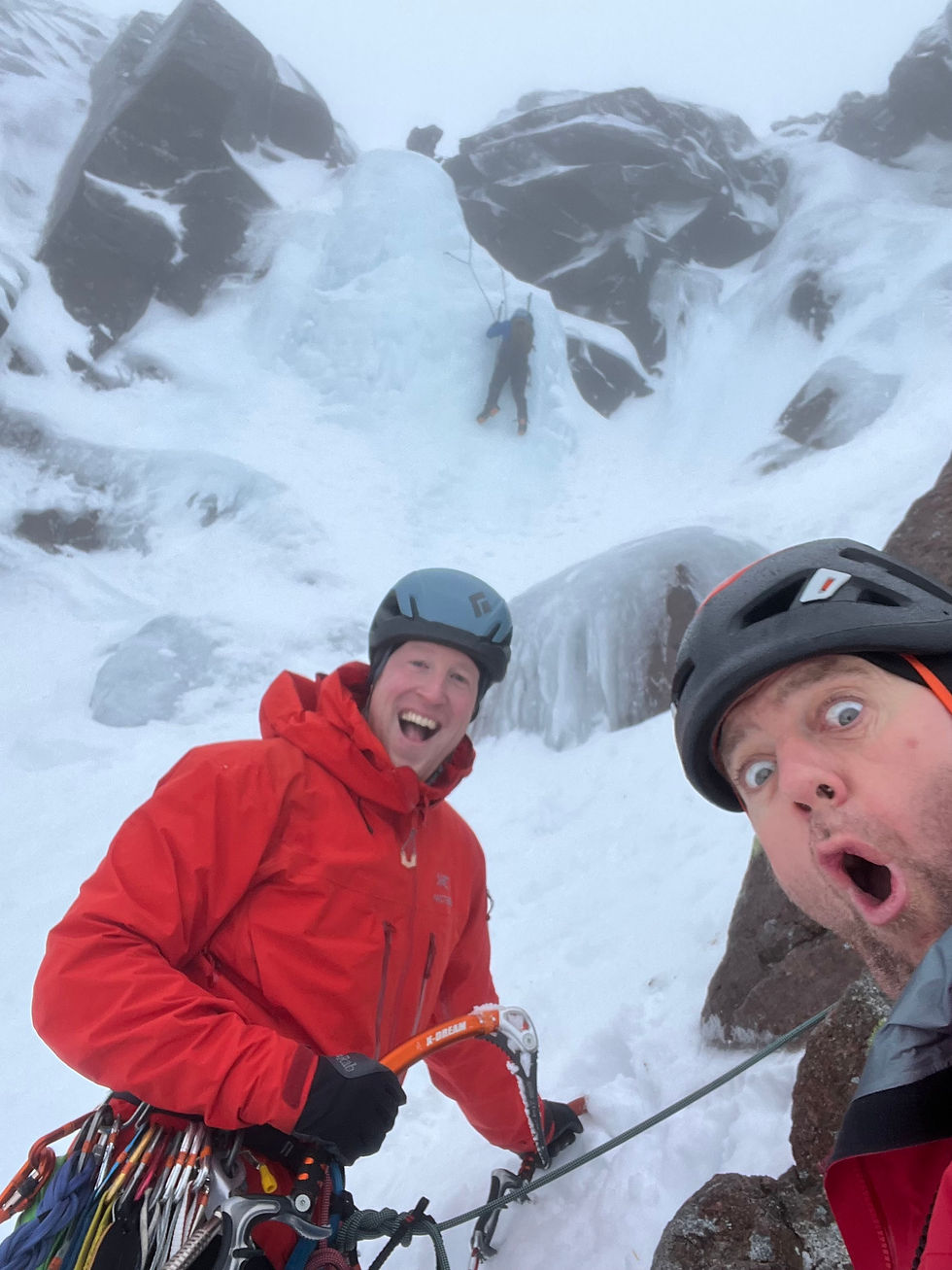
Axes come in all shapes and sizes, but they all share four universal components: a pick, an adze, a shaft, and a spike. The shaft length depends on your height. A traditional rule of thumb: when holding the axe by its head (pick and adze), the spike should reach the top of your boot. Most brands offer a range of lengths to suit different users.
The three common types of axes are walking axes, climbing axes, and mountaineering axes. A walking axe has a straight shaft, making it better for plunging or self-arrest. These typically range from 50cm to 70cm and are ideal for low-grade Scottish winter routes or multi-day alpine adventures. It’s a reliable workhorse for those transitioning from summer hiking to snowy terrain.
Climbing axes come in pairs—one with an adze, one with a hammer (sometimes both with hammers). They’re aggressively curved for ergonomic grip and reduced strain, and much shorter for precision when swinging or hooking. Mountaineering axes sit between the two: used solo like a walking axe but with a slight curve for technical placements. They’re more versatile than climbing axes, though less efficient for plunging.
To complicate things further, walking and mountaineering axes come with strength ratings: T-rated (technical) and B-rated (basic). T-rated axes are strong enough for use as a belay anchor. Most climbing axes are T-rated, but not all walking or mountaineering axes are—so check before buying. Look for a letter in a circle on the shaft. If you want one axe for everything, go for a T-rated model—it’ll be more durable on mixed terrain and safer for anchoring.
When selecting an axe, I always check two things after confirming the correct length. First, the adze size. A broader adze means less effort when cutting steps or digging emergency shelters. A small adze might look sleek but will cost you energy. Second, the weight. While lightweight gear is trendy, don’t go too light. A heavier axe penetrates hard neve or water ice more effectively. Some people buy shorter axes to save weight, but this can compromise safety and force you to bend over constantly—hurting your back anyway.
Picks wear down over time but can be sharpened with a file. Be aware: repeated sharpening shortens the pick and affects performance. Some axes allow you to replace the pick and adze, which is more sustainable and cost-effective than buying a whole new axe.
My first axe was a Grivel Munro—practically indestructible and still going strong after trips to the Alps and Scottish winters. It’s designed for winter walking and remains a popular choice. Other great options include the DMM Cirque (heavier but built to last), Petzl Summit or Sum’Tec (more technical, with optional trigger rests), and Edelrid Riots (my current go-to).
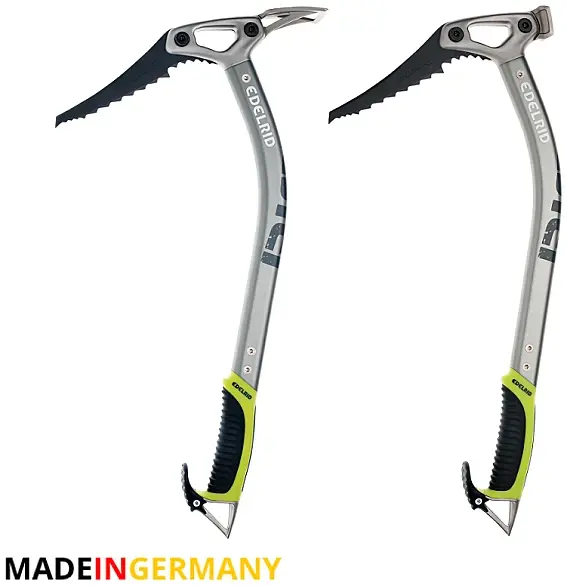
My first climbing axes were DMM Venoms (thankfully discontinued). They had straight shafts and drop picks, requiring serious grip strength. Today, DMM Flys are the entry-level climbing tools, while Petzl Quarks and Black Diamond Vipers are common on the mountain. For ice climbing, I swear by Cassin X Dreams. After a trip to Canada with Petzl Nomics, I switched and haven’t looked back. They swing naturally, feel balanced, and almost make climbing feel like cheating.
What should you do if you’re in the market for an axe? Keep all this in mind—and go try them in a shop. Like boots, what fits you might not fit someone else. Even better, borrow a friend’s axe to test it out before committing.


Comments